Posted in art, colorwork, craft, design, knitting, The Creative Process, The Design Process, yarn

What I Learned from the Swatch

A Design Idea and the Right Yarn

I’ve been dreaming of designing a top-down colorwork short-sleeved sweater, filling my Pinterest boards with images and colors that inspire me.  In the spring, I found all the colors I was looking for in a certain yarn line, only to discover that the yarn was spun too tightly for colorwork and that I didn’t like how it looked or felt for this design.

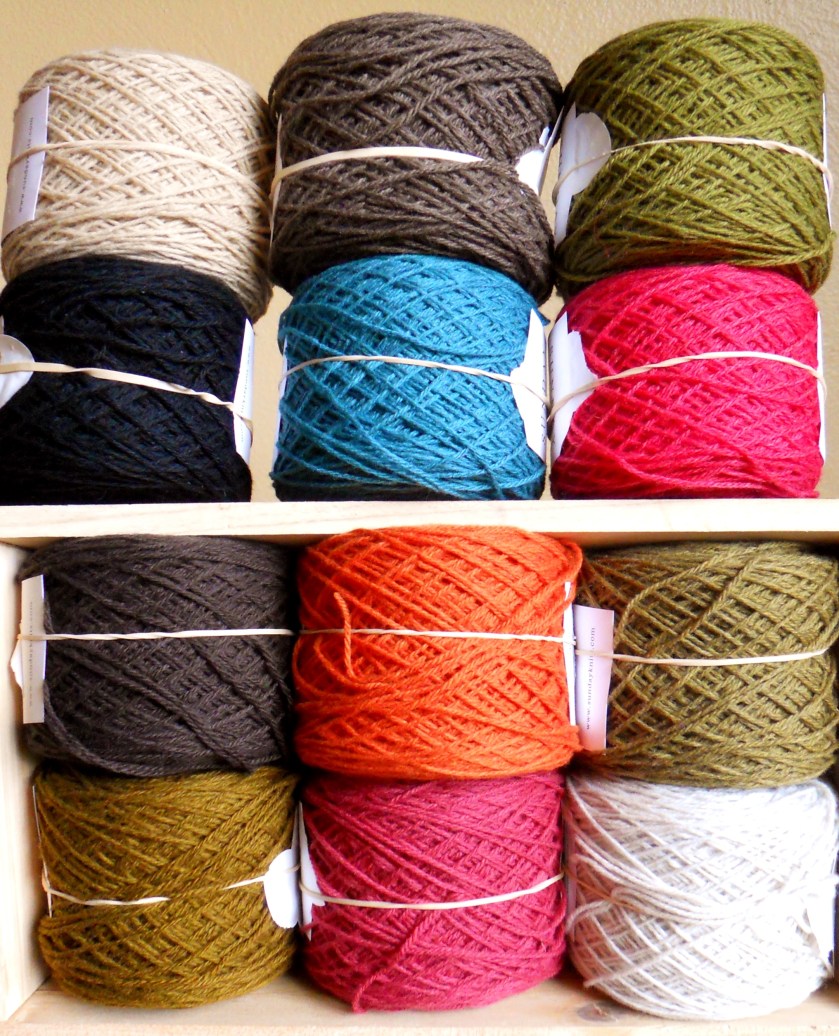
Finally I was introduced to the perfect yarn, Sunday Knits yarn by Carol Sunday.   I’m using her 3-ply yarn, with colors from three different fiber blends, Eden (100% Merino), Angelic (75% Merino, 25% Angora) and Nirvana (92% Merino, 8% Cashmere).  The yarn has a lovely hand, is available in over 60 colors, and is reasonably priced.  All of the fiber blends work well together.

Sand, Espresso, Pickle, Black, Lagoon, Melon, Earth, Carrot, Moss, Bronze, Rose, Mist

A Swatch and What it Taught Me

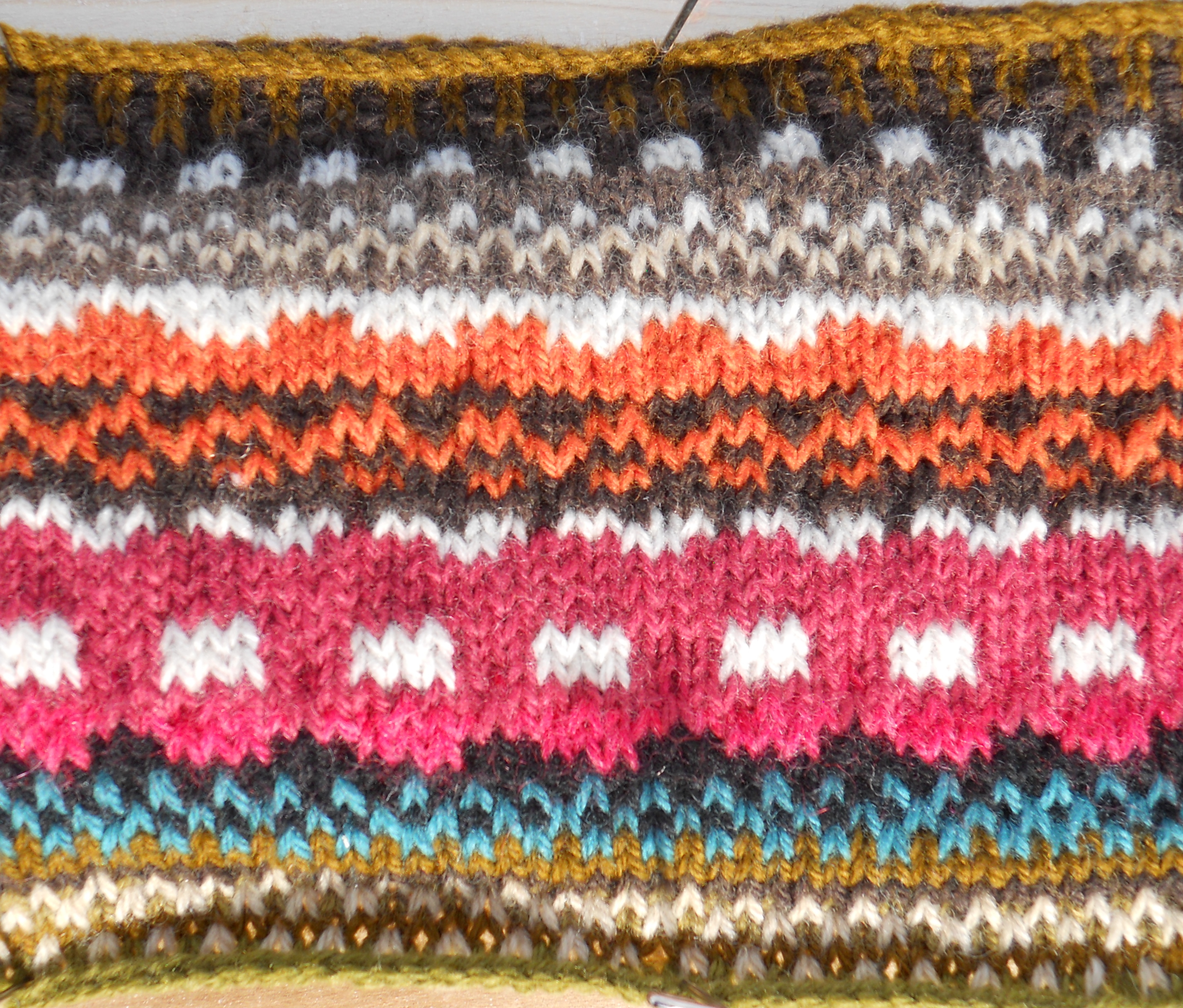
I wanted to work a swatch to find out how the yarn behaves and to see how the colors would look together.

The first thing that I learned is that Sunday Knits yarn is my new favorite for colorwork!  Look how nicely the fabric lies, even before the fabric was soaked and blocked.
swatchie

Next I learned that if I initially don’t like a color, such as the Rose colorway in the swatch above, knitting lots of it will never make me miraculously like it.  Why did I think that knitting more of that pale pinky-red would make me like it more?  (Just to clarify, there’s nothing wrong with the color, I just wasn’t happy with the way it looked with the other colors.)

Conversely, if I do like a color, such as Bronze, which is the cast-on and is immediately below the blue in the swatch above, even in little bits it makes me happy!

I also was reminded that I really don’t like white in a piece like this with lots of different colors – the contrast is too jarring.  I will be using Sand as the light background color in this pattern.

And finally, basic algebra is still useful!

algebra

I can’t wait to work more on this sweater!  I will keep you posted!

Two Special Surprises This Week

My friend Meg sent me custom-made knit equals joy ribbon.  How special was that?!?  I have some fantastic friends!

knit=joy

A friend at work had two extra yarn bowls (!) and she gave one to me!  It’s so pretty!

yarn bowl

I’m so thankful for the kindness of others!  I wish you all a wonderful week, and may you find or share those special moments of kindness!

Posted in colorwork, design, knitting, knitting patterns, The Creative Process, The Design Process

My Sense of Direction Mitts – A Look into the Design Process

Lovely mitts and photo by Meg.

My Sense of Direction Mitts is a good candidate for looking into the design process, as I can directly connect many of its design features with a specific influence or inspiration.  I am approaching this as an observer of my own particular experience in design.

The Conversation

In April 2014, I was working on this design, the Route 66 Driving Mitts:

DSCN4584

One day after work, I showed my prototype to a couple of coworkers.  One drolly asked, “How do you know which hand the mitt goes on?”  I was of course thinking that it’s worn so that the design is on the back of your hand.  His next question: “Why don’t they put left and right on mittens so you know which hand to wear them on?”  Immediately I wondered whether there existed any patterns indicating left and right.

The Process

Racing home, I went right to Ravelry and looked at the existing patterns.  There may have been one children’s pattern with left- and right-hand labels.  I was so surprised that there weren’t more!  So I grabbed my sketchbook and drew this (please excuse my sketching skills):

DSCN5075

My first thought was that the letters would be like old typewriter keys.

Typewriter by Sergey Zolkin

However, in playing around with the charting, it became clear that it would be difficult to create a nice round chart representing them that would work up nicely.

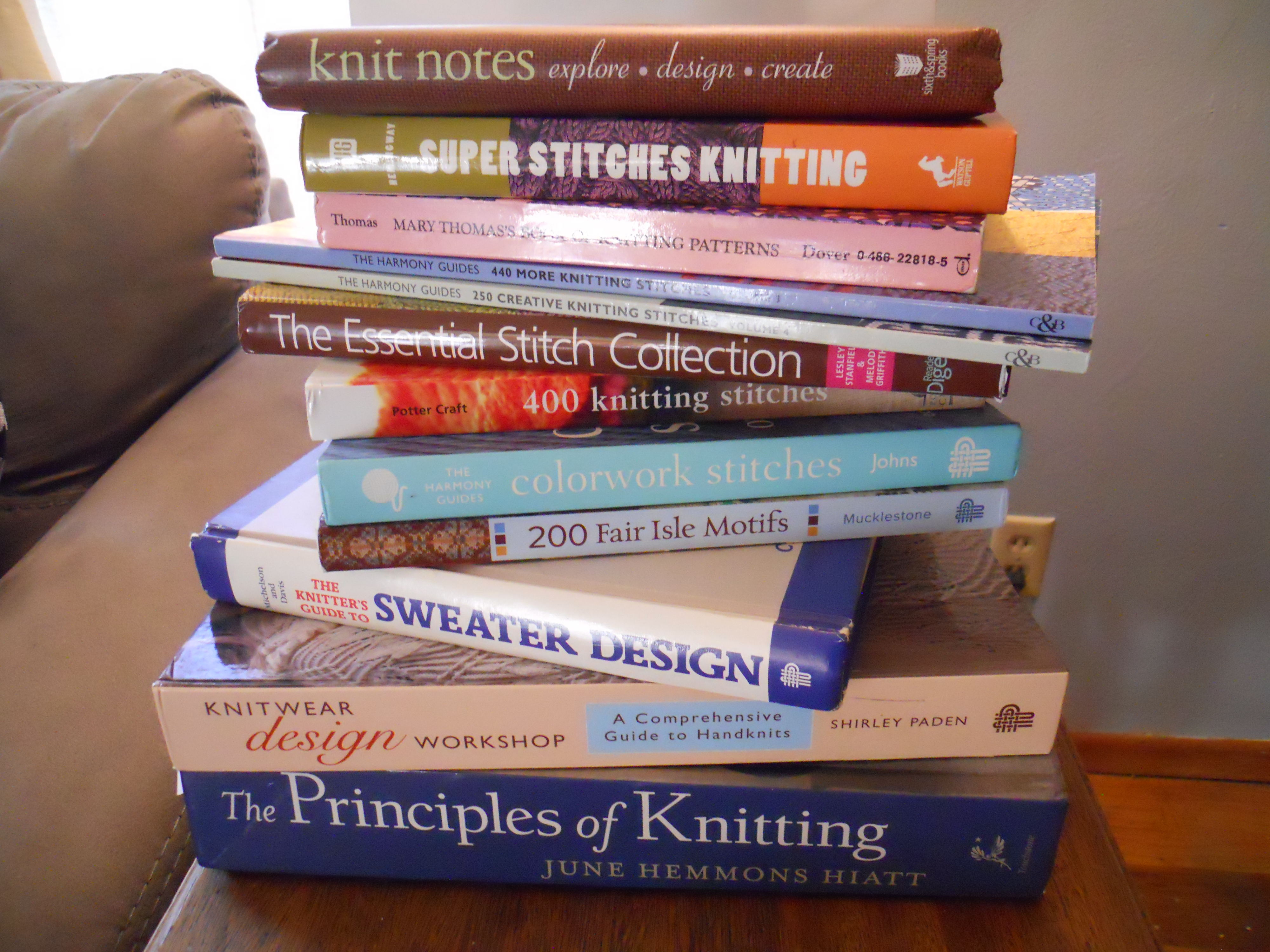
The next step involved browsing through stitch dictionaries and design books:

DSCN6009

It was in Mary Jane Mucklestone’s 200 Fair Isle Motifs that I found the lovely linked border around the letters.

DSCN4611 (2)

In these books I also found the arrow designs for the palms:

image3 (3)
These lovely mitts and photo by Jill.

Finally, I charted letters for upper case and lower case L and R.  The form of these letters changed very little from the original sketch.

A Word About Color:

The colors I used in my mitts were inspired by this piece of Polish pottery, a cherished coffee mug:

DSCN6836

I also tried the mitts in this color combination, which I did not like at all:

DSCN4902

It Seems to Me

It seems to me that a major part of the design process, for me, is keeping my eyes and ears open: seeing color and pattern in the things around me and listening to what interests and intrigues others.   Then, it is a process of narrowing down what works and what doesn’t work.  Trial and error through sketching, charting, and swatching are part of this winnowing process.  Somewhere along the way in this design process, I realized that I very rarely wear mittens here in Oregon, but I love fingerless mitts and can wear them indoors when my fingers get cold.

Also important in my design process are the questions I ask: Can I make this happen?  Could I design round, typewriter key-like charts?  No, I couldn’t.  Can I make arrows that point in the correct direction on each palm?  Yes!  How can I solve this problem?  That is a question that comes up in nearly every design.

Finally, and this may be the most important element in my design process, is allowing myself time to think and to allow different ideas to coalesce.  Some ideas occur in a flash, like the idea to make left- and right-hand mitts, while others take some time to work out.   And, after allowing some time to pass, sometimes new ideas occur in way that imitates intuition.  But I think the intuitive flashes are disparate ideas that have been working toward each other in my subconscious and finally they connect, as a Golden Spike.  I love when that happens, although sometimes I don’t want to wait!

Just for fun, working on the mitts at the beach:

DSCN4469

Thanks for taking the time to read about this adventure in design!  I hope to see you next time!

Note:  Featured photo (on home page) and mitts by stamura.